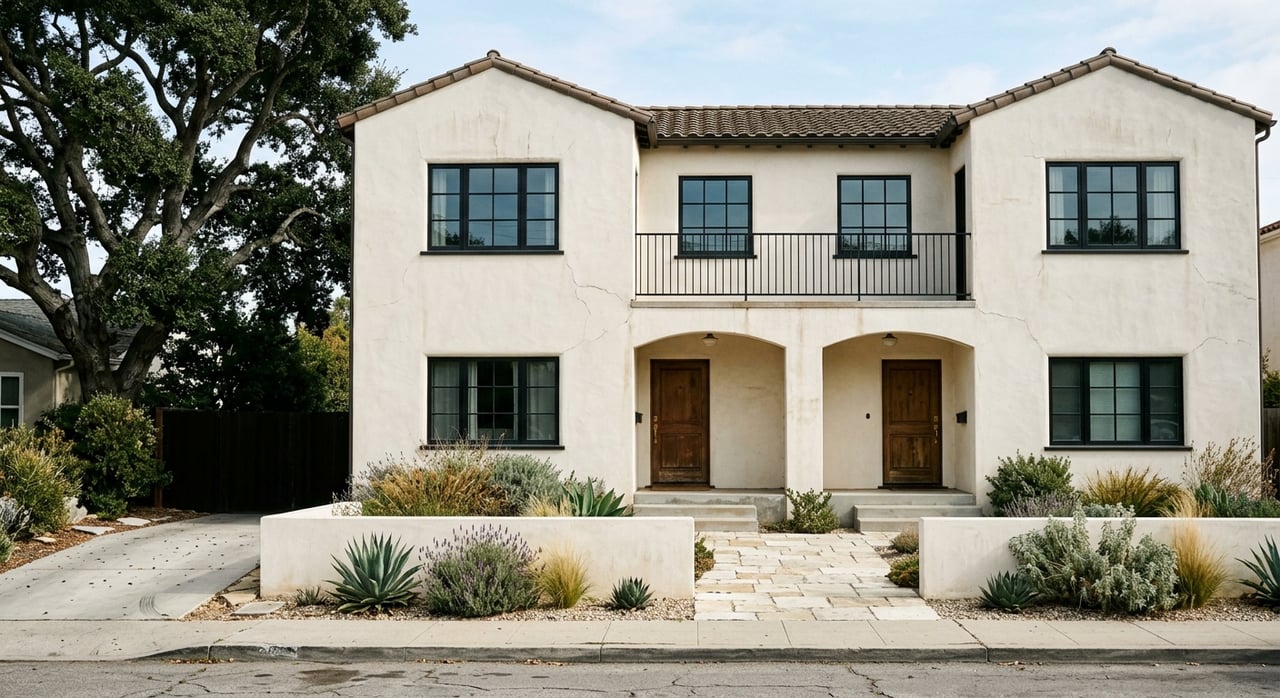
If you have been eyeing a duplex or small multifamily property in Watsonville, you are not alone. This part of Santa Cruz County offers something many buyers want but struggle to find: a market where rental demand appears durable, entry pricing is lower than the county overall, and owner-occupants can still explore income-producing options. Whether you are looking to house hack, add a long-term investment, or buy a property with future upside, understanding Watsonville’s local dynamics can help you make a smarter move. Let’s dive in.
Why Watsonville stands out
Watsonville is a renter-heavy market with local fundamentals that make duplexes and small apartment properties worth a close look. According to U.S. Census QuickFacts for Watsonville, the city has 51,320 residents, 15,151 households, a 44.8% owner-occupied housing rate, and a median gross rent of $1,889.
That renter share is meaningfully higher than the broader county. Santa Cruz County QuickFacts shows a 59.9% owner-occupied rate countywide, compared with Watsonville’s 44.8%, while the county’s median owner-occupied home value is also much higher than Watsonville’s. In practical terms, that can create a different kind of opportunity for buyers who want rental income, multigenerational flexibility, or an owner-occupied investment property.
Watsonville’s economy also helps explain why rental housing remains important here. The city sits within the Pajaro Valley, where agriculture and food processing are longstanding economic drivers, alongside construction and manufacturing. The local crop economy remains significant, with Santa Cruz County agricultural data reflected in Census reporting showing berries as a major part of the regional agricultural base.
Rental demand looks steady
If you are buying a duplex or small multifamily building, demand matters as much as price. Current data suggests Watsonville is a market with tight vacancy and a strong base of renter households.
A March 2026 Watsonville apartment profile from Point2 reports average apartment rent of $2,485, vacancy of 2.4%, and 8,511 renter households compared with 6,710 owner households. The same report shows that 76% of renter households are family households, 50% include children under 18, and the average renter household size is 3.66.
That matters because it suggests family-sized rentals are not a niche product here. In fact, the same Point2 profile notes that 38% of rentals are two-bedroom units, which supports the idea that practical, well-located two- and three-bedroom layouts may align with local demand.
A second source points in the same direction. Watsonville’s 2023-2031 Housing Element cites a 4.2% overall vacancy rate using 2021 ACS data, which is below both Santa Cruz County and the City of Santa Cruz. Different data sets measure vacancy differently, but together they support the same broad takeaway: rental supply appears tight enough that well-maintained units can attract attention.
Duplexes can work for owner-occupants
For many buyers, the appeal of a duplex or small multifamily property is not just investment return. It is flexibility.
If you plan to live in one unit and rent the other, Watsonville can make sense as a house-hack market. The city’s lower owner-occupied rate, lower home values relative to the county, and larger renter base all support the idea that an owner-occupant can offset housing costs while building equity.
This setup may also work well if you want room for extended family, a partially offset mortgage payment, or a property that can evolve over time. One of the biggest advantages of a small multifamily property is that you are not relying on a single use case. You may start as an owner-occupant and later transition to a full rental, depending on your goals.
Investors should focus on real underwriting
If you are buying strictly for income, Watsonville is a market where disciplined underwriting matters. Inventory is thin, and asking cap rates can look reasonable at first glance, but small sample sizes can distort the picture.
Crexi’s Watsonville multifamily overview shows a median asking cap rate of 5%, while visible listings in the market have clustered in roughly the 5% to 6% range. A visible LoopNet example referenced in current market reporting also supports that general band, but these are asking numbers, not closed-sale comps.
That means you should be cautious about treating any one cap rate as the market rule. In a thin market, one renovated building or one unusually strong rent roll can skew the visible data. The better approach is to test the actual income, expenses, deferred maintenance, parking situation, and lease structure against your own return target.
What to evaluate before you write an offer
Buying a duplex or small multifamily property in Watsonville is not just about price per unit. It is about whether the parcel, improvements, and permit path support your plan.
Check zoning first
Before you get too far into a deal, confirm the parcel’s zoning and allowed uses through the City of Watsonville zoning map and planning resources. The city notes that planning staff can help buyers understand whether a parcel may require added parking, site work, or other approvals.
This is especially important if you are looking at a property with nonconforming improvements, unpermitted work, or expansion potential. A duplex that looks straightforward on paper can become more complex if you plan to reconfigure units or add square footage.
Understand the permit path
Watsonville’s local code shows that permit requirements can change significantly depending on the size and scope of the project. In the RM-3 zoning code, multifamily dwellings and apartment units of 16 or fewer are allowed with an Administrative Review Permit, while 17 or more units require a Special Use Permit.
The RM-2 section of the same code notes that projects with more than two dwelling units are subject to Site Plan Review and the city’s Multi-Family Technical Guidelines. If your strategy includes adding units, combining lots, or significantly redeveloping a site, the approval path may be more involved than you expect.
Pay close attention to parking
Parking can be one of the biggest practical constraints on a Watsonville small multifamily deal. The city’s Housing Element notes that parking requirements of two or more spaces for many multifamily units are considered a housing constraint.
That matters because parking standards can directly affect your ability to add units, legalize existing improvements, or complete a value-add renovation. It can also influence tenant appeal, especially on smaller lots where every square foot counts.
Review site and street improvement needs
Not every rehab is limited to the building itself. Watsonville’s standards for duplexes, triplexes, fourplexes, and apartments include minimum street-width and infrastructure requirements, and work in public streets may require encroachment permits.
If your renovation plan touches frontage improvements, sidewalks, or utility-related work, ask early what that could trigger. Small details at the street can have a real effect on timeline and budget.
ADU potential can change the upside
One of the more interesting questions to ask before closing is whether the property may support an accessory dwelling unit strategy. Watsonville updated its ADU rules in 2025, and the city’s ADU guide says existing multifamily lots may allow up to eight detached ADUs, subject to limits tied to the number of existing units.
The same city guide notes that no parking is required for ADUs, though it is encouraged. That does not mean every multifamily parcel is a fit, but it does mean ADU potential should be part of your early due diligence, especially if you are comparing two properties with similar current income.
For the right parcel, ADU capacity could create future flexibility, added rental income, or a phased improvement plan. The key is to verify what is actually allowed before you buy, not after.
Redevelopment plans may trigger added rules
If your purchase is really a redevelopment play, you will want to look beyond the existing building and into city policy. Watsonville’s Affordable Housing Ordinance can matter for new residential development, especially when multiple new units are being added.
This does not affect every duplex buyer, but it can become important if you are looking at a larger repositioning strategy. If the property’s value is tied to future unit creation, your due diligence should include a clear review of development standards, timing, and compliance obligations.
A practical Watsonville buying strategy
In a market like Watsonville, the best small multifamily deals are often the ones where the numbers and the physical site both make sense. A low vacancy environment and a renter-majority population are helpful, but they do not replace detailed property review.
As you compare opportunities, focus on these questions:
- Is the current rent roll supported by actual lease terms and unit condition?
- Are the unit sizes and bedroom counts aligned with local renter demand?
- Does the parcel’s zoning support your intended use?
- Will parking or site improvements limit expansion plans?
- Is there ADU or renovation upside that is realistic, not just theoretical?
- Does the asking cap rate still work after you account for repairs, reserves, and management?
Watsonville offers a compelling case for duplex and small multifamily buyers because the local fundamentals are grounded in real housing demand, not just investor buzz. If you buy carefully, verify the permit path, and underwrite conservatively, this market can offer both stability and flexibility.
If you are weighing a duplex, triplex, fourplex, or small apartment property in Watsonville, working with a local team that understands Santa Cruz County submarkets, income-property tradeoffs, and parcel-level due diligence can save you time and help you avoid expensive surprises. If you want help evaluating opportunities, sourcing off-market possibilities, or pressure-testing a property’s upside, connect with The Portola Group.
FAQs
What makes Watsonville appealing for duplex buyers?
- Watsonville has a renter-majority profile, tight vacancy indicators, and lower home values than Santa Cruz County overall, which can make duplexes appealing for both owner-occupants and long-term investors.
What cap rates are common for Watsonville small multifamily listings?
- Current marketed listings suggest a rough asking cap-rate range around 5% to 6%, but those are live listing figures, not closed-sale comps, so each deal still needs careful underwriting.
What Watsonville property types may fit a house-hack strategy?
- Duplexes and small multifamily properties can fit a house-hack approach if you plan to live in one unit and rent the others, especially in a market with a large renter base like Watsonville.
What zoning issue matters most for Watsonville multifamily buyers?
- Parcel-specific zoning matters because allowed uses, permit requirements, parking needs, and site review standards can all affect whether your plan is feasible.
What should buyers know about parking for Watsonville duplexes and multifamily properties?
- Parking can be a major constraint because local standards may affect remodels, unit additions, or legalization of existing improvements, so it should be reviewed early in due diligence.
What should buyers know about ADU potential on Watsonville multifamily lots?
- Watsonville’s updated ADU rules indicate that some existing multifamily lots may allow detached ADUs, subject to city limits and parcel-specific review, so it is worth verifying before closing.