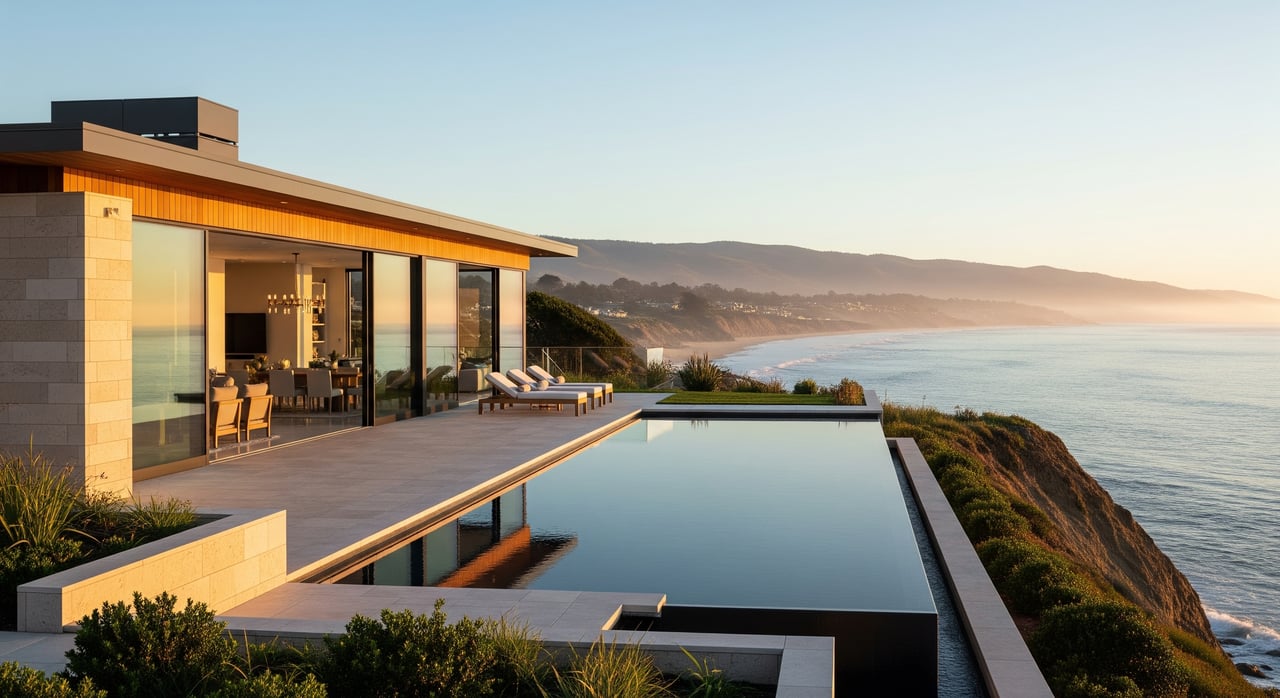
Thinking about selling your Santa Cruz ocean‑view home but unsure where to price it? You are not alone. View homes are unique, and small details can shift value by tens or even hundreds of thousands. In this guide, you will learn the specific features buyers pay for, how to select and adjust comps, and the due diligence that helps you set a confident price and attract the right offers. Let’s dive in.
What drives value in Santa Cruz ocean‑view homes
Pricing a view property is not the same as pricing an inland home. In Santa Cruz, buyers look hard at the quality and permanence of the view, the elevation and lot position, walkability to the sand, and how well the home captures the view from main living spaces.
View corridor quality
The view is the single biggest driver. Buyers notice whether the ocean is unobstructed or partial, how wide the panorama is, and whether power lines or rooftops sit in the foreground. They also consider permanence. If future construction could block the sightline, many buyers will discount the price. You want to document whether the view is unobstructed, partial, or fleeting and show evidence of permanence when possible.
How to use it in pricing: adjust comps based on view differences and support your adjustments with photos, maps, and a short narrative. Practitioners often use smaller adjustments for partial views and larger ones for wide, unobstructed panoramas. Illustrative ranges used locally can run from low single‑digit percentages up to about 10 percent for partial views, with panoramic, unobstructed views often commanding mid‑teens percentage premiums or higher. Always tie the final number back to closed sales and documented view quality.
Elevation and lot position
Higher elevation can improve the line of sight and reduce beach noise, while lower lots near the sand can boost lifestyle appeal. Orientation matters too. West or southwest exposure often enhances natural light and sunset views. At the same time, higher sites can face more wind and potential erosion concerns. Compare to comps at similar elevation and orientation, and use photos, site maps, and any elevation certificate to justify differences.
Beach walkability and access
Distance to the sand is a key factor. A pleasant five to ten minute walk to a popular access point is more valuable than a great view that still requires a drive to reach the beach. Buyers also care about stairs or bluff trails and nearby parking. In your pricing, treat walkability as its own adjustment and make it visible in your marketing with clear walking routes and photos of the access points.
Condition and how the home captures the view
A home that centers the view from the main living areas, has well‑placed windows, and offers decks or patios oriented to the ocean usually commands stronger pricing. Coastal maintenance also matters. Buyers will look for signs of corrosion, deck wear, or seawall issues. Separate the idea of “the view exists” from “the view is a design feature,” and price accordingly.
Legal, regulatory, and hazard factors
Coastal properties may face sea‑level rise, bluff erosion, and flooding risk. Permits for shoreline work and future changes often involve extra steps. Insurance availability and cost can affect buyer affordability, especially if the home sits in a FEMA Special Flood Hazard Area. Before you price, check the site’s flood designation with the FEMA Flood Map Service Center, review sea‑level projections with the NOAA Sea Level Rise Viewer, and understand permitting context using the California Coastal Commission’s permitting guidance and its coastal hazards and sea‑level rise page.
Neighborhood nuances along the coast
In Santa Cruz, value can change block to block. Areas like West Cliff Drive and Lighthouse Field, Seabright, Pleasure Point, Seacliff, and Davenport each have different elevation profiles, walkability, parking dynamics, and exposure to coastal hazards. Buyers also compare nearby Capitola when shopping this segment. Focus on very local comps within the same coastal strip and similar elevation before looking farther afield.
How to choose the right comps
Your goal is to find closed sales and pendings that match view quality, elevation, and proximity to beach access. Start tight, and only expand the search when needed.
Where to search and how far back
- Look first at the same street or bluff segment with similar elevation and orientation.
- Use closed sales from the last 3 to 12 months when available. In shifting markets, weight recent sales more heavily.
- Consider pendings as a reality check and review high‑quality expired or withdrawn listings to spot price ceilings buyers resisted.
What to adjust and by how much
- Standard differences: square footage, bed and bath count, condition, lot size, garage and parking, HOA dues for condos, and usable outdoor space.
- Ocean‑specific differences: view quality and permanence, elevation and wind exposure, walkability to beach access, and hazard‑related costs like seawall or major repairs.
- Use illustrative ranges for view only as a starting point. Partial views can see smaller adjustments, while unobstructed panoramic views may justify a materially higher premium. Document with photos and a clear rationale.
A pricing workflow that works
Pre‑listing due diligence
Gather these items before you set price:
- County assessor records for lot size, permitted square footage, and tax history. The Santa Cruz County Assessor site is a good starting point.
- MLS solds, pendings, and actives within the nearest coastal micro‑market.
- Recent permits and any open code items via the Santa Cruz County Planning Department and applicable city pages like the City of Capitola Community Development department.
- Natural Hazard Disclosure report details and any past insurance claims.
- Flood zone info and any elevation certificate along with FEMA flood maps.
- Sea‑level rise and bluff erosion context using the NOAA Sea Level Rise Viewer and California Coastal Commission resources.
- Photos and drone imagery that show view lines, neighboring rooftops, and any potential obstructions.
Select and adjust comps step by step
- Start with closed sales on the same street or bluff segment and similar elevation. If none exist, expand carefully while keeping view character and orientation as primary filters.
- Remove sales older than 6 to 12 months unless inventory is extremely thin. Weight fresh sales more.
- Make standard size and condition adjustments first.
- Make discrete view adjustments last. Support the size of the adjustments with photos and a short narrative about permanence risk.
- Reconcile to a value range and pick a list strategy that fits your timing goals.
Set your list strategy
Santa Cruz ocean‑view buyers can be fewer but highly motivated. Underpricing to spark a bidding war can work in some markets but risks leaving money on the table if the buyer pool is thin. Your list price should be defensible with comps that show similar view quality and position. Align timing with seasonal demand. Interest tends to concentrate in summer and early fall, but a strong, clean view with easy beach access draws attention year‑round.
Marketing that captures the view premium
Accurate pricing and premium marketing work together. A clear presentation reduces buyer uncertainty and helps you capture more of the view premium.
- Use professional photography, drone footage, and twilight shots that showcase line of sight and sunset orientation.
- Provide floor plans and virtual tours that highlight sightlines from living areas.
- Include walking routes to the nearest access points and on‑the‑ground photos of stairs or trails.
- Call out view permanence with maps, photos, and brief notes on nearby development patterns.
Risks, disclosures, and what to prepare
Selling in California requires complete and accurate disclosures. Include coastal and hazard information along with any known structural issues.
- Title and permits: confirm whether any seawall, bluff stairway, or shoreline improvement is recorded and properly permitted. Check county and city records before listing.
- Insurance and lending: if the property lies in a FEMA Special Flood Hazard Area, most lenders will require flood insurance. Verify typical policy availability and premium ranges early.
- Long‑term risk: sea‑level rise projections and erosion concerns can influence buyer demand and financing. Share authoritative resources like the California Coastal Commission and NOAA’s viewer so buyers can review.
Quick checklist before you price
- High‑quality photos and drone shots that document the full view corridor and neighboring rooftops.
- A site or plot map showing elevation, orientation, and distance to the nearest beach access.
- A packet of recent, relevant sales and pendings for bluff‑top or ocean‑view homes.
- Copies of permits, Coastal Commission correspondence if any, and disclosure documentation.
- Flood zone designation, and an elevation certificate if available.
- Recent maintenance or inspection reports for decks, foundations, and any shoreline structures.
- HOA rules if the home is a condo plus any local short‑term rental limits.
Questions to ask your appraiser or agent:
- Which sold comps best match our view and elevation, and why?
- How would you quantify the view adjustment, and what photos or data support it?
- Are there development plans that could affect our view corridor?
- What insurance or lender requirements should we disclose now to reduce friction later?
Ready to price with confidence?
Pricing an ocean‑view property in Santa Cruz is a nuanced process. When you combine a defensible pricing range with premium, view‑forward marketing and complete coastal due diligence, you give buyers clarity and position your home to capture the full view premium. If you would like a tailored valuation and a marketing plan built for your view, reach out to The Portola Group. Get your instant home valuation.
FAQs
What matters most when pricing a Santa Cruz ocean‑view home?
- View quality and permanence, elevation and lot position, beach walkability, and how the home frames the view from main living areas.
How do I compare my view to recent sales?
- Use very local comps on the same bluff or street, study photos to rate view quality and permanence, then apply adjustments last with a short narrative that explains the difference.
Do flood zones or sea‑level rise affect value and financing?
- Yes, properties in FEMA Special Flood Hazard Areas often require flood insurance, and sea‑level rise or erosion concerns can affect buyer demand, so verify details using FEMA and NOAA resources.
When is the best time to list an ocean‑view home in Santa Cruz?
- Buyer interest often concentrates in summer and early fall, though a clean, unobstructed view and easy access can draw buyers throughout the year.
What marketing helps capture a view premium?
- Professional photos, drone and twilight shots, floor plans that highlight sightlines, and clear documentation of walkability and view permanence.
What paperwork should I gather before setting price?
- County assessor and permit records, hazard and flood information, any elevation certificate, recent inspection reports, and a curated set of nearby ocean‑view comps.